
Curious minds.
Creative pathways.
Room to grow.
Educational therapy and creative learning for capable minds whose potential doesn’t always show up on the page.
We connect learning, executive functioning, and emotional regulation—with curiosity at the center.
Children, teens & adults • Individualized. Strengths first.

begins here.
Where curiosity leads. Creativity transforms. Growth flourishes.
01 / A LITTLE RECOGNITION
You see the potential.
And the daily friction.
A bright idea. An unfinished assignment. A love of stories. A reluctance to read. The two can exist together.
Does any of this feel familiar? Choose one to explore.
A DIFFERENT QUESTION
What would make the first step easier? We look at the skills, conditions, and supports that help a learner begin.
02 / THE GAP BETWEEN KNOWING AND SHOWING
Understanding the whole learner
changes where we begin.
Learning challenges can involve more than the academic skill itself. Planning, attention, emotions, confidence, and past experiences may all shape what a learner can show.
At The Curious Lab, we get curious about that whole picture and build support around it.
03 / THE CURIOUS LAB APPROACH
Curiosity opens the door.
Structure helps us move.
Explore the C.U.R.I.O.U.S. Framework Educational therapy brings academic intervention together with executive skills, regulation, and self-understanding. Creativity gives us more ways in.
THE C.U.R.I.O.U.S. FRAMEWORK™
Think Curious. Act with Intention.
Seven interconnected practices.
Multiple pathways. Endless possibilities.
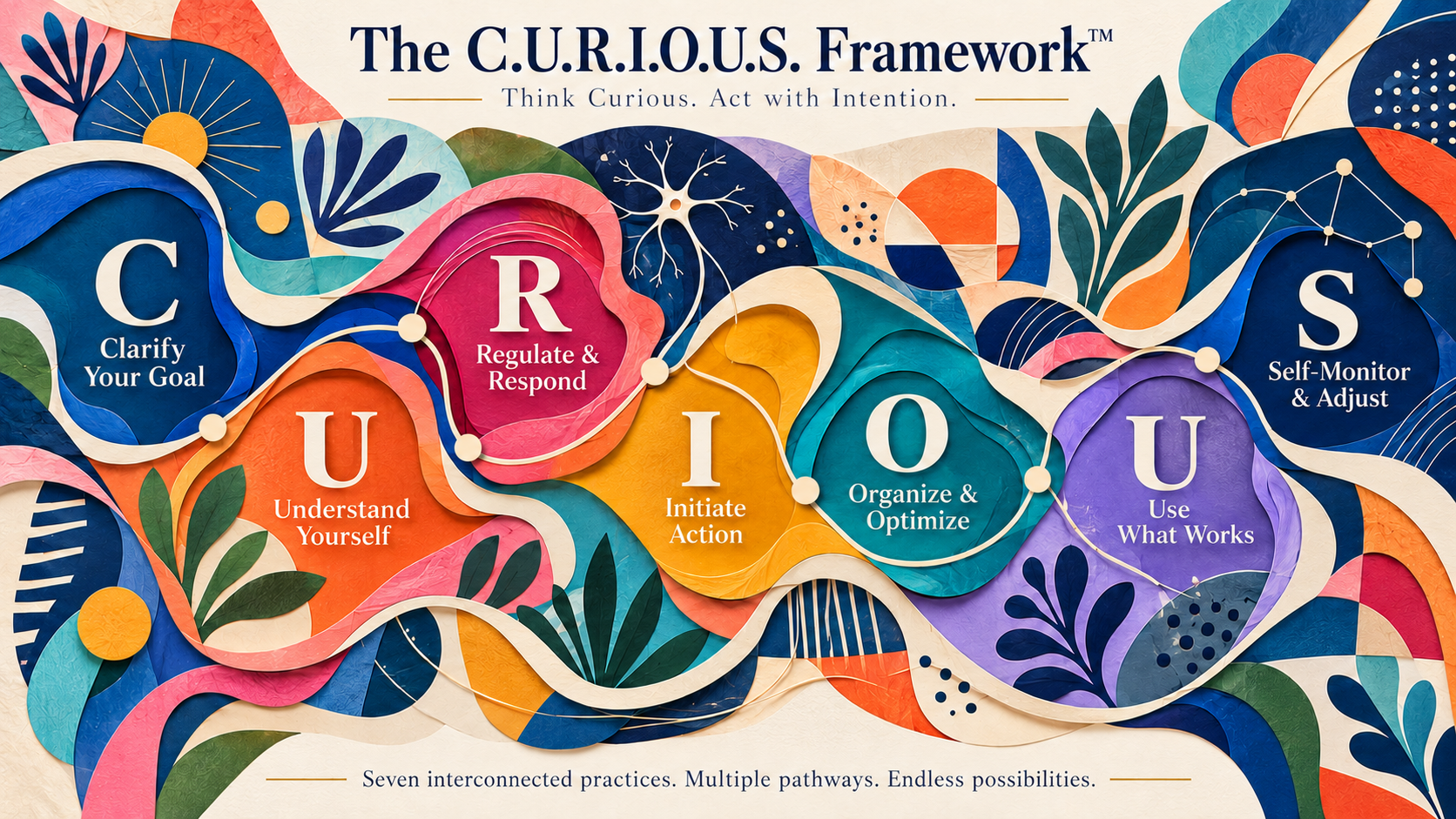
What if curiosity opened new possibilities for meaningful growth?
The C.U.R.I.O.U.S. Framework™ brings together executive functioning, emotional regulation, self-regulated learning, and behavior change. Through guided inquiry, cognitive behavioral strategies, and expressive arts, we help learners deepen self-understanding, explore possibilities, and turn insight into intentional action.
Begin with possibility.
We notice interests, strengths, and patterns. What draws this learner in? When does learning feel easier? Their experience is part of the conversation.
An interest in drawing becomes a way to map ideas before writing a paragraph.
04 / SPECIALIZED SUPPORT
One learner.
Many possible pathways.
Start with what matters most. Pathways can work together as needs, strengths, and goals become clearer.
Educational Therapy
Individualized support that connects academic learning, executive skills, emotional regulation, and confidence.
Executive Functioning
Practical systems for starting, planning, organizing, managing time, and following through.
Reading with HEART™
Structured, multisensory reading instruction with educational therapy and expressive arts for the whole child.
Creative Makers Studio
Expressive arts and creative exploration offer doorways into self-understanding, regulation, and learning.
Curious Coaching
A reflective, practical space for young adults and adults to clarify direction and build ways forward.

A SIGNATURE PROGRAM OF THE CURIOUS LAB™
Reading with HEART™
Evidence-Based Reading Instruction
for the Whole Child.
HEART stands for Holistic Expressive Arts Reading Therapy.
Reading is a skill. It is also an experience. We make room for both.
Instruction draws from IMSE Orton-Gillingham+ and Lindamood-Bell approaches, with educational therapy practices and expressive arts woven around the learner.
A GENTLE PLACE TO START
Find your
starting point.
Three small questions. A pathway to explore. You can change your answers at any time.
This is a conversation starter, not an assessment. Your answers stay in this page and are not submitted.
05 / MORE THAN A FINISHED ASSIGNMENT
Skills for today.
A different relationship
with learning.
“I understand how I learn.”
Recognize strengths, notice patterns, and name the conditions that help.
“I have a way to begin.”
Turn a big task into visible, manageable steps and a system to return to.
“I can ask for what I need.”
Build self-advocacy and confidence through practice, reflection, and connection.
These are the capacities we work toward. Every learner’s goals and pace are individual.
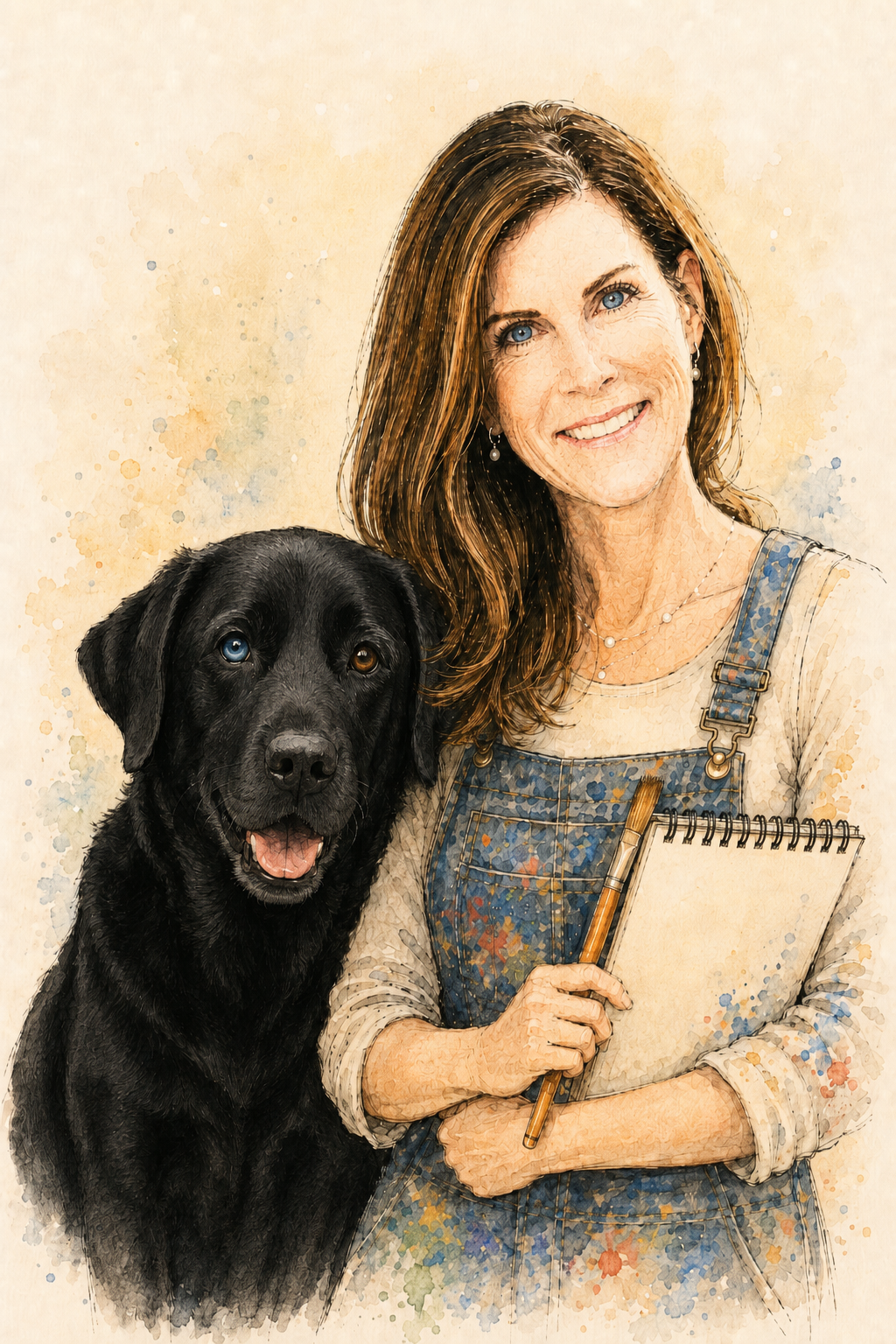
“When words are not enough, creativity gives us an opening to access and express our inner world.”
The Curious Lab06 / THE HUMAN BEHIND THE LAB
Meet Dr. Young
Teresa Young, Ph.D., ET/P
Founder / Educational Therapist
Welcome to The Curious Lab, a lively crossroads where my greatest passions converge: unraveling the mysteries of how people learn, sparking creativity to open new doors, and lighting the way for learners to uncover their unique strengths. This studio is more than just a workspace; it’s a vibrant space where curiosity is not only welcomed but celebrated, learning differences are embraced, and everyone is encouraged to explore, experiment, and embrace their unique abilities.
With over two decades of experience supporting children, adolescents, and adults across schools, higher education, and private practice, I weave together educational therapy, cognitive-behavioral strategies, positive psychology, and insights from research on executive functioning, emotional regulation, and self-regulated learning. My approach is rooted in individualized instruction, collaborative goal-setting, and ongoing progress monitoring. I help learners decode how their thoughts, emotions, and behaviors shape their learning. Together, we explore and amplify strengths, craft creative strategies, and build habits that spark meaningful change and lasting independence.
Education & professional training
Education & credentials
- Ph.D., Clinical Psychology
- Master’s Degree, Counseling
- Certified Educational Therapist (ET/P)
- Certified Executive Functioning Coach
- California Multiple Subject Teaching Credential
- Pupil Personnel Services Credential
- Certified Social-Emotional Arts (SEA) Trainer
- Board Certified Health and Wellness Coach
- ICF Certified Coach
Specialized training
- Executive Functioning Skill Development
- Multisensory Literacy: IMSE Orton-Gillingham+
- Multisensory Literacy: Lindamood-Bell
- Processing & Cognitive Enhancement
- Dyslexia Remediation
- Social-Emotional Learning
Certifications & memberships


Specialized training

07 / YOUR NEXT SMALL STEP
You don’t need all the answers.
Just a place to begin.
Tell us what feels hard, what lights your learner up,
and what you hope could feel different.
Families can begin with a free 30-minute consultation.
A FEW THINGS YOU MAY BE WONDERING
Good questions.
How is educational therapy different from tutoring?
Educational therapy addresses learning challenges through individualized instruction and strategies that support academic skills, executive functioning, and the social and emotional aspects of learning. The goal is greater self-awareness, confidence, and independence.
Tutoring typically focuses on a particular subject or course, helping students understand content, practice skills, complete assignments, and prepare for tests.
Do we need a diagnosis to begin?
No, a diagnosis is not required to begin. However, testing may be beneficial during the course of educational therapy to clarify a learner’s academic and social-emotional strengths and needs. Dr. Young can discuss assessment options and recommend appropriate next steps.
Can more than one pathway fit?
Yes. A learner working on reading may also need support with starting, organizing, or confidence. The pathways describe areas of focus; a conversation helps determine how they can fit together.
What might happen in a session?
Sessions are tailored to each learner’s strengths, needs, and goals. They may include a brief check-in, targeted skill instruction, cognitive behavioral strategies, creative or multisensory learning experiences, and guided reflection to help learners apply new skills and strategies in academic work and everyday life.
How are sessions offered, and how can we check availability?
Sessions are offered individually and in small groups. Please contact The Curious Lab office to schedule a session.